Systems that actually work
Not mockups and not slide decks. Each of these was built end to end, and each one works. Two you can watch in action, one you can test yourself. If your case isn't here, write to us: chances are we've built something close.
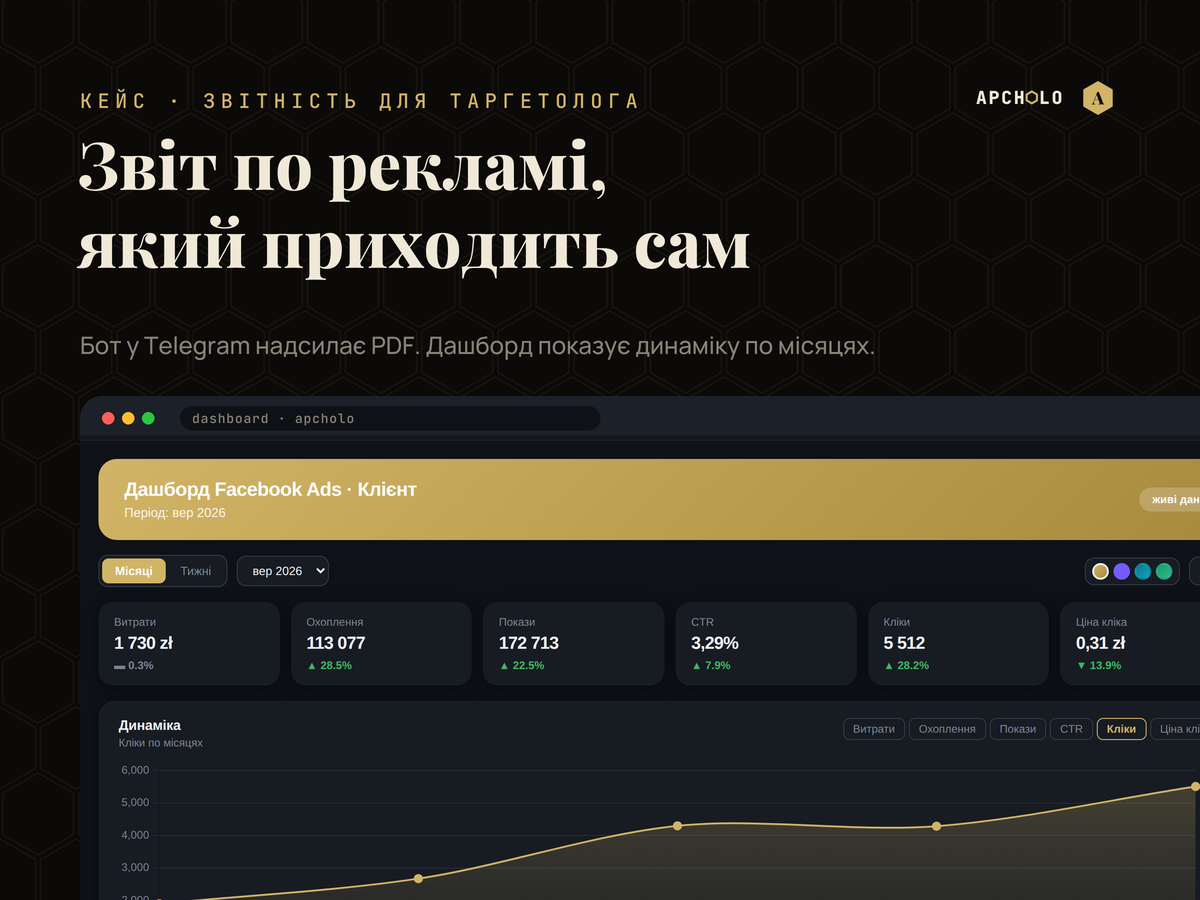
A media buyer runs several clients. Every month he opens each ad account, collects the numbers by hand, builds a table and sends it. An hour or two per client, on repeat.
A Telegram bot: type "report for September" and get a ready PDF with spend, clicks, leads, cost per lead and return by campaign. A web dashboard: one link where all months sit side by side, with dynamics per metric and conclusions. Ad account access is permanent, nothing expires after two months. Next step for the owner: add sales, and next to clicks you see how much money the ads brought in.
CVs in the inbox, data in a spreadsheet, emails written by hand. Every candidate meant 20–30 minutes of routine, and the more applications came in, the more people fell through the cracks.
An application arrives, the system reads the CV, scores it, checks for duplicates and files it into the CRM. The recruiter gets a card in Telegram and sends a test task or rejection with one tap. Every decision updates the database and emails the candidate automatically.
Clients write at all hours in different languages. The questions repeat: residency, taxes, prices. Agents burn hours on conversations that lead nowhere while hot leads get lost in the noise.
The bot answers in four languages and holds the client's language throughout. Facts come only from the agency's knowledge base, zero invented numbers. It qualifies in conversation and, when the client is ready, hands the agent a structured lead and logs it to the CRM.
Contracts and invoices scattered across email, cloud and paper. Finding one takes 20–30 minutes. A quarterly reconciliation means days of manual digging.
Send a photo to Telegram, the text is recognised, the system identifies type, parties, dates and amounts, and the document lands in a structured database. The original goes to the archive; search takes seconds.
DMs arrive around the clock, the admin replies during business hours. Bookings by hand, no reminders, client history living in someone's memory.
A DM manager answers questions, books time slots via Cal.com, handles reschedules and cancellations, sends reminders the day before, and builds a client database from the first message.
An auto service runs on phone calls. A client calls in the evening, nobody picks up. The mechanic is under a car and can't reply in chats. The owner never sees how many requests got lost in between.
The client describes the problem by voice or text. The system transcribes it, classifies the category (suspension, engine, electrics, body, service) and matches the right mechanic by specialisation. The mechanic replies by voice too: free slots and a price, and the client sees concrete date buttons. Then booking, confirmation, status updates. Client, mechanic and owner each see their part.
This is our own system, the largest we've built (around 90 modules). It runs, and you can test it yourself: message us and we'll give you access to the bot so you can walk the whole client journey in two minutes.
Want the same in your business? Tell us what repeats every day, we show how to remove it.A prototype in days, with your data. You pay only if we go further.
Free process review →